
Skillful Multiculturalism
Collective child rearing can be a joy!! But we need skills to do it well.

Hi there!
A quick announcement that I’m preparing to deliver the keynote at Bank Street’s Infancy Institute next week on Cultural Self-Awareness as Professional Practice. This is both a full-circle moment (I’m an alumna) and a pinch-me moment. The Infancy Institute is a conference I never miss because it is always inspiring, thought provoking, and connecting.
If you’re an early childhood educator, childcare provider, director, home visitor, early interventionist, social worker, or otherwise support families with young children, you can still sign up! I’ll also be participating on a panel dreaming about what Universal Child Care could look like. And there are other INCREDIBLE workshops.

Preparing my keynote has had me thinking about culture and practice in all kinds of ways. This, alongside working on my book, has anchored my year in terms of research, writing, and conversation. It (along with life as a parent) has also taken me away from my newsletter over the last few months. But as the keynote approaches and my writing winds down, I’m excited to continue the conversation over here on substack.
To that end, here’s a little peek at some of what I’ve been thinking about…

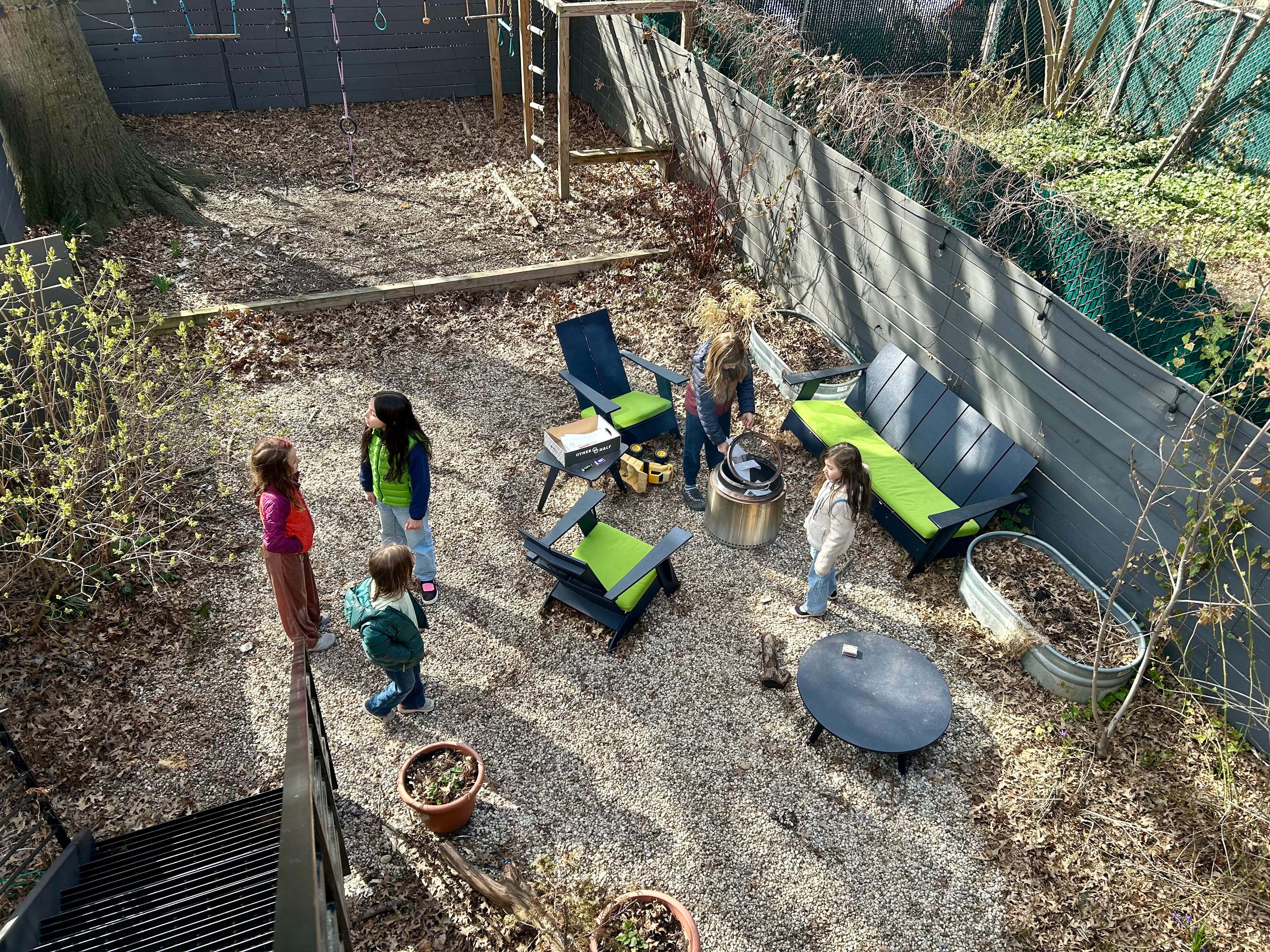
One of the reasons I care so deeply about helping families embrace multiculturalism is that it makes raising children so much more enjoyable. In my line of work, I hear many parents lamenting the lack of a village. “We were never meant to raise children alone,” they say. Then, in the very next sentence, they express a distrust of the very people who would make up that village: grandparents, aunts and uncles, neighbors, teachers, and even fellow parents.
This distrust seems to stem primarily* from a belief that we, as parents, are wholly responsible for our children’s mental health, and a fear that our children’s mental health is fragile. This makes sense, given the many voices suggesting it hinges entirely on their interactions with others, especially in their early years. The stakes are high. If someone responds to our child in a way that is out of alignment with what we believe is right, we fear it may cause irreparable damage. And because we live in a multicultural society, this misalignment happens all the time.
Collective child rearing is less complicated in a monocultural “village” where most everyone shares values and beliefs about what children need. So we are told, anyway. This story shows up in advice to create your own village (aka echo chamber), and in nostalgic takes on what we can learn from “traditional” societies.
This type of premodern, precolonial cultural cohesion, however, is a myth. First of all, cross-cultural communication is as old as culture itself. Secondly, the diversity of approaches to child rearing extends so far back into history that to claim there exists a singular traditional or natural approach is incorrect. Worse, this plays directly into the dangerous myth of moral purity. (And conveniently leaves out any examples of child rearing practices that would complicate the narrative–see: infanticide, withholding colostrum, teasing, separating infants from their parents, etc.)
If the idealized conflict-free village does not exist, what’s a modern parent to do?
I suggest we instead embrace our villages with all their human messiness and disagreement. This is not to say that we allow everyone equal access to our children as a way to offload some of the labor of raising them. We have to practice discernment. It is also not to say that we should dissolve all of our differences into relativism. I’m not suggesting that we should rely on our children’s resilience to excuse behaviors that cause harm.
What I am suggesting is that if we want to have a village, we have to develop skills to be good villagers. This includes learning how to welcome difference, hold each other accountable, accept responsibility, and prioritize our relationships over control.
It sounds easier said than done, to be sure. But I’ve found that there are actually lots of simple ways to start building these village supporting skills. More on that soon.
Hasta pronto,

* There are other contributing reasons, of course. They include the personal (our own childhood experiences in which we locate harm) along with reasons grounded in a realistic power analysis (how our child’s perceived race, gender, ability, etc. increases or mitigates risk).

Get Curious
Use the following question to spark a conversation, and share your thoughts with us in the comments.
Is there an adult that unexpectedly played a meaningful, supportive role in your own childhood? What did you connect over?

Can’t get enough culture?
Here are a few things I’ve found interesting lately.
Four Families: This 1960 film from American anthropologist Margaret Mead follows four families in India, France, Japan, and Canada. You can watch it here.
On Turning Ten: My eldest is just nine years old, but as she inches closer to double digits, she has me thinking about this poem by Billy Collins.
25th Annual Egg Rolls, Egg Creams, and Empanadas Street Festival: Our father’s day plan by request. New York or nowhere vibes.
You hit a really important foundational issue when you wrote parents feel "wholly responsible for our children’s mental heath". I would extend this beyond mental health to all things about parenting from birth well into adulthood.
By being "wholly responsible" we run the risk of eliminating diverse ways of being, living, coping, and loving - and this is what allows us to connect more deeply with people who are not just like us.
What you are bringing to light here is so so important for humanity.
When we consciously or unconsciously structure our family interactions where our children are commodities or outcomes to our efforts, we constrain them as autonomous souls.